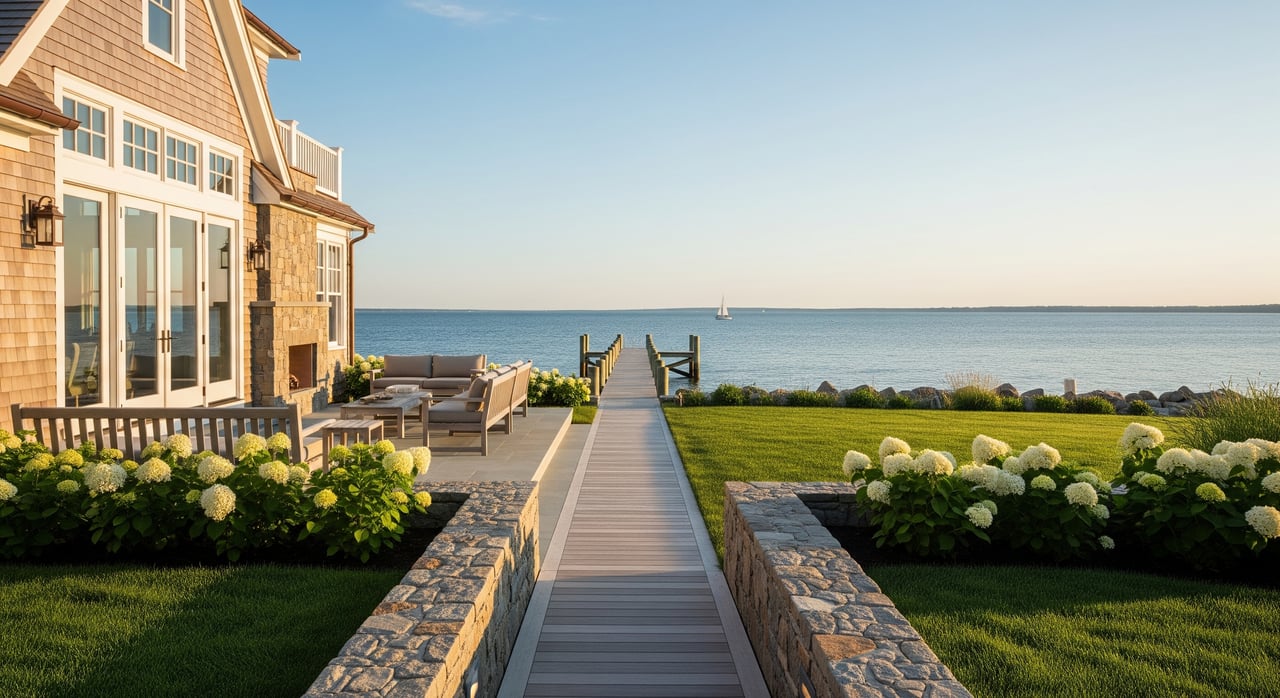
Thinking about listing your East Hampton waterfront and want to move fast without surprises? You know the setting sells itself, but the shoreline rules and paperwork can slow the best listings. With the right prep, you can give buyers confidence, compress your time to market, and protect your negotiating leverage. This guide shows you exactly what to assemble, who to consult, and how to present a permitting‑ready package that resonates with serious East End buyers. Let’s dive in.
Why permits matter in East Hampton
Waterfronts in East Hampton sit under multiple layers of oversight. Projects may involve the Town of East Hampton, Suffolk County Department of Health Services, the NYS Department of Environmental Conservation, the U.S. Army Corps of Engineers, and state coastal programs. Each agency has different standards and timelines, and some reviews are sequential rather than parallel.
Local rules can be stricter than state or federal guidance. Floodplain rules, FEMA maps, and Base Flood Elevation influence building standards and insurance. Title, riparian rights, and the location of the mean high water line can affect what transfers at closing and what a buyer can improve after purchase.
Build a permitting‑ready package
Your goal is to remove uncertainty before you list. The more complete and current your documentation, the faster a qualified buyer can move from interest to contract.
Land and legal records
- Current deed and title report noting easements, rights‑of‑way, and covenants.
- Copies of any prior approvals or permits from the Town, NYSDEC, USACE, or Suffolk County, including final permits and any variances.
- Recorded surveys and legal descriptions.
Surveys and tidal lines
- Recent boundary survey showing structures, access, and distances to the shoreline.
- Delineation of mean high water, wetland limits, and any mapped Coastal Erosion Hazard Area lines.
- Update the survey if it is older than about 3–5 years or if the shoreline has shifted.
Flood and elevation documents
- FEMA Flood Insurance Rate Map panels and the property’s flood zone.
- Elevation Certificate if available, or a note that one can be obtained.
- Any Letter of Map Amendment or Letter of Map Revision.
Structural and shoreline reports
- Certified inspection of bulkhead or seawall, including condition, elevations, toe and cap details, and recommendations.
- Dock or pier report covering permit history, condition, piles, tie‑ins, and access.
- History of shoreline stabilization, beach nourishment, or living shoreline projects, with maintenance records.
- Dredging history and depths if relevant, and any sediment testing if dredging is planned.
Environmental considerations
- Ecological surveys such as eelgrass or shellfish habitat if they exist.
- Notes from consultations with the Town’s Natural Resources staff or NYSDEC regarding seasonal work windows or species protections.
Utilities and infrastructure
- Septic records detailing system type, installation date, maintenance, and any Suffolk County certifications.
- Well logs and water quality tests if applicable.
- Details on shoreline lighting, drainage, and stormwater discharge systems.
Technical studies and estimates
- Phase I Environmental Site Assessment if one exists.
- Coastal or geotechnical engineering reports related to stabilization or docks.
- Contractor estimates and designs for common buyer requests such as bulkhead replacement or a dock rebuild.
Visual documentation
- Recent high‑resolution photos or drone imagery at both high and low tide.
- Historical aerials or photos that illustrate shoreline change over time.
Timelines, costs, and bottlenecks
Surveys and boundary plus tidal delineations often take 2–6 weeks. Structural inspections and engineering reports also run 2–6 weeks. Town reviews can range from weeks to several months depending on complexity, with NYSDEC and USACE timelines spanning several weeks to multiple months for individual permits.
Expect a full multi‑agency approval effort to take 3–12 months when required. Nationwide permits at the federal level can be shorter if applicable. Emergency or minor maintenance may move faster, but seasonal windows and habitat concerns can limit when work occurs.
Approximate costs vary by scope. Surveys tend to be in the low thousands. Bulkhead inspections and engineering reports often fall in the low to mid thousands. Full shoreline design or new dock engineering can range from several thousand to tens of thousands. Construction, remediation, or replacements can scale from tens of thousands into the hundreds of thousands based on site conditions and design.
Common slowdowns include missing or outdated surveys, unclear mean high water location, sensitive habitat that triggers added studies, unpermitted past work, interagency coordination, public hearing requirements, contractor availability, and limited tide or seasonal work windows.
Buyer expectations and messaging
Buyers will ask for proof of permits on docks, bulkheads, and moorings. They will want septic compliance, flood risk context, and an Elevation Certificate for insurance and lending. Engineer reports that quantify condition and remaining life are valuable.
Sellers face risks when structures are non‑conforming or unpermitted. Floodplain status and erosion vulnerability can affect insurability and lender approval. Title and access questions, including rights to submerged lands or public beach strips, can become obstacles if not clarified.
When your documentation is in order, highlight it. Consider emphasizing a permitting‑ready package, recent repairs with permit numbers, current FEMA zone and Elevation Certificate, and transparent disclosure about any prior after‑the‑fact permits. This transparency supports buyer confidence and reduces renegotiation risk.
Six‑week pre‑market plan
- Week 0: Gather deed, title, prior permits, septic records, and any existing surveys or reports.
- Weeks 1–4: Order an updated boundary and shoreline survey. Schedule bulkhead and dock inspections. Request an Elevation Certificate if needed.
- Weeks 3–6: Commission environmental or engineering reports if indicated. Request any sanitary certifications from Suffolk County.
- Weeks 4–8: Consult the Town Building Department and Natural Resources to confirm likely permit pathways and work windows.
- Weeks 6–12+: If permits or repairs are needed pre‑sale, submit applications and set buyer expectations with a clear timeline and estimates. If not, present your compiled permitting package at launch.
Local agencies and experts
Verify current contacts and requirements with these resources:
- Town of East Hampton: Building Department, Natural Resources or Wetlands Division, and Harbormaster.
- Suffolk County Department of Health Services: Sanitary Division for septic approvals and certifications.
- NYS Department of Environmental Conservation: Region 1 for tidal wetlands and coastal permits.
- U.S. Army Corps of Engineers: New York District for navigable waters and dredging.
- NYS Department of State: Coastal Management Program for LWRP and Coastal Erosion Hazard Area guidance.
- FEMA: Flood Map Service Center for FIRM panels and Elevation Certificate guidance.
Professionals to consider engaging:
- Coastal or geotechnical engineer with shoreline design experience.
- Licensed land surveyor experienced in tidal and mean high water delineations.
- Wetlands consultant or environmental scientist for habitat surveys and mitigation planning.
- Local marine contractor familiar with East Hampton permitting and construction.
- Real estate attorney or title company versed in riparian rights and submerged lands.
- A licensed agent with deep East Hampton waterfront experience to coordinate presentation and buyer communications.
How we help you go to market
If you want a quiet, efficient path to market, assemble your permitting‑ready package before you list. That single step can shorten escrow timelines, support premium presentation, and preserve leverage through inspections and underwriting. It also sets a clear roadmap for any post‑closing improvements a buyer may plan.
Heskell Advisors combines land‑use and permitting counsel with design and financial insight to prepare waterfront sellers for a clean launch. We help you prioritize what to order, coordinate timing with trusted local professionals, and present the right documentation to serious buyers. Through a curated marketing approach and pre‑sale coordination, we position your East Hampton waterfront to attract decisive offers.
Ready to talk timing, scope, and presentation for your shoreline property? Connect with Marc Heskell to schedule a confidential market consultation.
FAQs
What approvals do East Hampton waterfront sellers commonly need?
- Depending on scope and location, reviews may involve the Town of East Hampton, Suffolk County Health, NYSDEC Region 1, the U.S. Army Corps of Engineers, and state coastal programs.
How long can waterfront permits and reviews take in East Hampton?
- Timelines vary by project, but combined multi‑agency approvals can take 3–12 months, with some general or nationwide authorizations processed more quickly.
Why is a recent survey with tidal lines important for listing?
- Buyers and agencies rely on current boundary, mean high water, and wetland limits to verify compliance, plan improvements, and avoid disputes at closing.
What is an Elevation Certificate and why do buyers ask for it?
- It documents building elevations relative to FEMA flood standards, informing insurance and lending; many lenders and insurers require it for waterfront properties.
How do unpermitted docks or bulkheads affect a sale?
- Unpermitted or non‑conforming structures can reduce marketability, trigger remediation, or lead to lower offers, so document permit history and current status.
Which reports most increase buyer confidence on shoreline condition?
- Certified bulkhead or seawall inspections, dock condition reports, and clear maintenance histories help buyers assess remaining life and near‑term capital needs.