Buying raw land in Bridgehampton can look simple on paper and turn complex very quickly. One parcel may appear ready for a single home, while the lot next door may involve agricultural limits, frontage questions, wetlands mapping, or septic review before you can confirm what is truly possible. If you are considering land here, understanding the difference between farm fields, oversized residential parcels, and flag lots can help you avoid expensive assumptions. Let’s dive in.
Bridgehampton Land Is Not One-Size-Fits-All
Bridgehampton falls within the Town of Southampton zoning system, and the official zoning maps for the area show a mix of residential, country-residential, and open-space districts rather than one uniform pattern of lots or subdivisions. You can review the town’s official zoning maps for the Bridgehampton area to see how varied parcel conditions can be from one road to the next.
That matters because land value in Bridgehampton often comes down to what the zoning district allows. On Southampton’s land-use tables, minimum lot sizes range from 10,000 square feet in R-10 to 200,000 square feet in CR-200, with several categories in between. In practical terms, the zoning label is often your first clue about whether a parcel may suit one house, a larger estate plan, or a more formal subdivision review.
Start With the Zoning District
Before you focus on design ideas, privacy, or even price per acre, start with the district designation. A parcel in a smaller-lot residential district is a very different acquisition from land in a large-lot country-residential district.
In Bridgehampton, those differences can affect:
- Minimum lot area
- Frontage requirements
- Subdivision potential
- Whether a flag lot may be considered
- Whether the parcel may be affected by agricultural overlay rules
- Whether density incentives or development-right transfers could come into play
For buyers planning a custom home or compound-style use, this first zoning read often saves the most time. It helps separate parcels that are straightforward from parcels that need deeper land-use analysis.
Farm Fields Require a Different Analysis
Bridgehampton still includes larger farm and reserve parcels, and that is not just part of the area’s history. Suffolk County’s 2025 Agricultural and Farmland Protection Board agenda listed Bridgehampton parcels connected to Mecox Bay Dairy LLC and Butter Lane Farm LLC, while the county notes that Agricultural District 5 covers Southampton and East Hampton.
If you are looking at farmland or land near active agricultural use, you should treat it differently from a typical residential lot. Southampton Town code states that soils in the Agricultural Overlay District that fall in capability Classes I and II are intended to be retained for permanent agricultural use. That can materially affect how a parcel is underwritten and what long-term development assumptions are realistic.
Suffolk County also explains that its farmland preservation program purchases development rights while leaving land in agricultural use. The county further notes that inclusion in an Agricultural District can protect farms from nuisance complaints tied to standard agricultural practices and from over-restrictive local regulations.
For you as a buyer, the key takeaway is simple: not every attractive open parcel is a blank slate. Some land may carry agricultural context or restrictions that directly affect future use, valuation, and exit strategy.
Flag Lots Can Work, But Only Sometimes
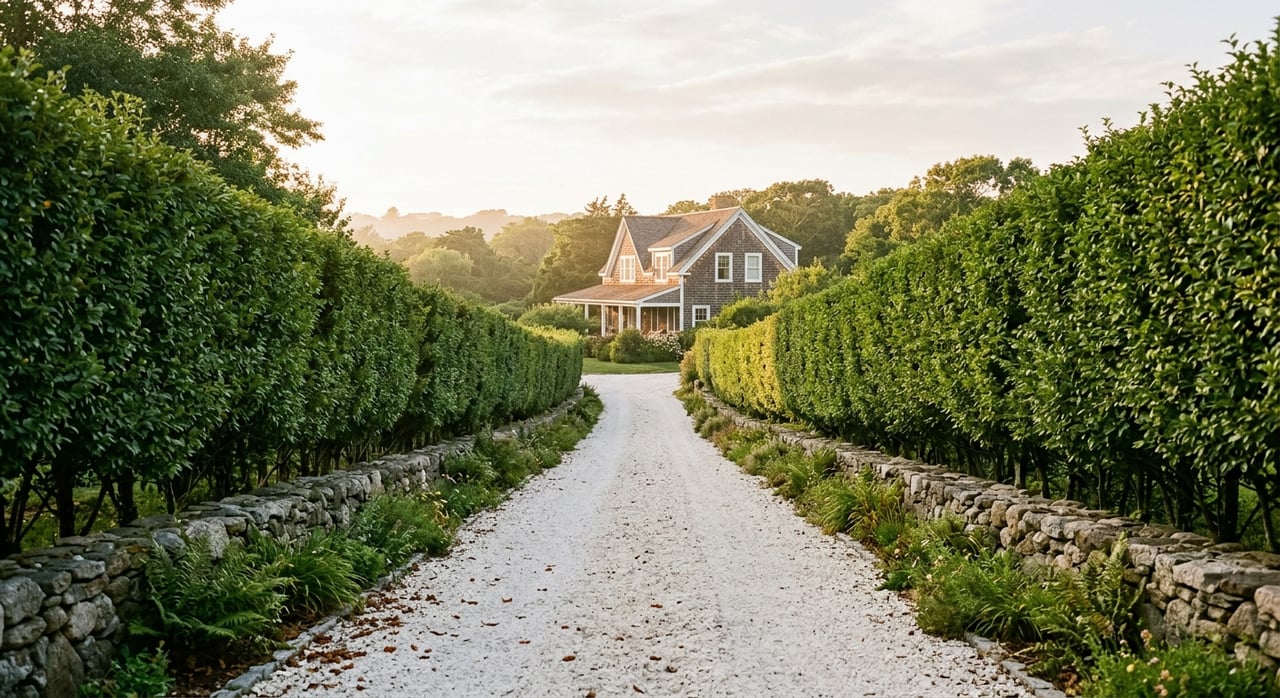
Flag lots often attract buyers who want privacy away from the road. In Bridgehampton, that can be appealing, but it is important not to assume that a long driveway automatically means a parcel is ideal or even eligible.
Southampton’s subdivision rules allow a limited number of flag lots when they meet specific standards. The town’s rules focus on lot shape, size, and access geometry, and in several districts the buildable portion must be at least 1.5 times the district minimum lot area, not counting the access strip.
Frontage rules matter too. Southampton generally requires at least 40 feet of road frontage in all districts, with 20 feet allowed for approved flagpole lots. That means a narrow access segment may be acceptable only if the parcel qualifies under the town’s flag-lot framework.
Here is the practical point: a flag lot is not just a privacy feature. It is a zoning and subdivision issue. When buyers skip that distinction, they can overestimate what a parcel can support.
Subdivision Potential Depends on More Than Acreage
Larger parcels often invite questions about creating multiple lots, adding guest structures, or planning a future compound. In Bridgehampton, acreage is important, but it is only one part of the analysis.
Southampton’s subdivision standards address street layout and natural-resource protection in detail. The town’s rules note that blocks are generally 400 to 1,600 feet long, and subdivisions next to highways or certain collector streets may not have direct lot access. Plats must also map wetlands, roads, drainage, utilities, sanitary systems, and disturbance areas within 200 feet of wetlands.
That means a parcel with enough gross area may still face design or approval constraints because of access, environmental mapping, or layout requirements. In other words, buildable yield and gross acreage are not the same thing.
When Density Rules May Matter
Some larger tracts can trigger more advanced planning tools. Southampton states that a site seeking a density incentive must be at least 10 acres in CR-200 and at least 6 acres in several other districts.
The town also says that a subdivision into two nonconforming lots generally requires at least 5 acres in CR-200, 3 acres in CR-120 and R-120, and at least 1.5 times the minimum lot size in other eligible zones. These thresholds can shape whether a parcel is best viewed as a simple homesite, a long-term hold, or a planning project.
If development rights or Pine Barrens credits are part of the concept, location still matters. Southampton notes that transfers are generally limited to parcels in the same school district unless the Town Board approves otherwise. For buyers, that is a reminder that theoretical density is not always the same as actionable density.
Septic, Water, and Surveys Belong in Due Diligence
Land buyers sometimes treat wastewater and water service as issues to solve after closing. In Suffolk County, that is not the safest approach.
The county states that new homes and businesses generally require wastewater review, and a permit is required for new construction. The county also notes that projects in a sewer district may need county DPW or local sewer approval, and parcels in a public water district may require a water availability letter.
Suffolk County’s residential wastewater standards add that sewage disposal systems cannot be installed without county permit approval, occupancy is prohibited without final approval, and written approval of the site plan or survey is required before construction begins. For a land buyer, that makes septic feasibility, well conditions, and survey quality part of the acquisition analysis, not an afterthought.
Clean parcel identification matters too. The county explains that each parcel is identified by district, section, block, and lot through its Tax Map Division system, and sewer permit applications require surveys of each lot and the overall subdivision. If a parcel is being marketed with future potential, accurate mapping and survey work are essential to test that story.
A Simple Review Framework for Buyers
If you are evaluating land in Bridgehampton, a disciplined review process can reduce uncertainty quickly. Before you become attached to a concept, confirm the basics in this order:
- Zoning district and minimum lot size
- Frontage and access conditions, including flag-lot issues
- Agricultural overlay or preservation context
- Wetlands and environmental mapping requirements
- Wastewater and water-service feasibility
- Subdivision thresholds and layout constraints
- Survey accuracy and parcel identification
This sequence helps you move from broad possibility to realistic execution. It also makes it easier to compare a conventional residential lot with a larger field parcel that may look more exciting but carry more limits.
Why Bridgehampton Rewards Parcel-by-Parcel Analysis
Compared with nearby village settings that often use their own zoning and subdivision codes, Bridgehampton parcels are more likely to be evaluated as land-planning projects. The combination of larger minimum lot sizes, agricultural overlays, frontage rules, and septic review means that even experienced buyers benefit from a parcel-specific approach.
That does not make Bridgehampton land less compelling. In many cases, it is exactly what creates opportunity. But the best outcomes usually come from matching your goals to the parcel’s actual zoning, access, and environmental profile rather than relying on visuals, acreage, or broker shorthand alone.
If you are considering a land purchase in Bridgehampton, careful early analysis can help you protect downside, clarify timeline, and identify where genuine upside exists. For confidential guidance on Bridgehampton land, estate parcels, and development-oriented opportunities, connect with Marc Heskell.
FAQs
What should you check first when buying land in Bridgehampton?
- Start with the parcel’s zoning district, because Southampton’s minimum lot sizes and use rules vary widely by district and shape what may be possible on the site.
Are flag lots allowed for Bridgehampton land purchases?
- Yes, but only in limited circumstances under Southampton subdivision rules, with specific standards for shape, access, frontage, and minimum buildable area.
Can farmland in Bridgehampton be developed like a normal residential lot?
- Not always. Parcels affected by agricultural overlay rules or farmland preservation conditions may involve limits that make them different from a standard residential homesite.
Does a Bridgehampton land purchase need septic review?
- In many cases, yes. Suffolk County says permits and wastewater review are generally required for new construction, and site plan or survey approval is part of the process.
Does a larger Bridgehampton parcel automatically mean it can be subdivided?
- No. Acreage alone does not determine subdivision potential, because frontage, access, wetlands mapping, sanitary feasibility, and district-specific thresholds all matter.
Why is a survey important when buying land in Bridgehampton?
- A current survey helps verify boundaries, frontage, access, parcel identification, and site conditions that may affect permitting, wastewater approvals, or future subdivision planning.