If you search for a home in Amagansett as if it were one uniform market, you can miss what really drives value and fit. In this hamlet, a few blocks can change your daily routine, your privacy, your access to the beach, and even what may be possible on a property over time. If you want a smarter way to narrow your search, it helps to understand how Amagansett’s micro-areas work before you tour. Let’s dive in.
Why micro-areas matter in Amagansett
Amagansett is a hamlet in the Town of East Hampton, and its layout is more varied than many buyers expect. The Town’s planning documents describe concentrated pockets of medium-density residential development rather than one uniform pattern across the hamlet. They also note that nearly 44.75% of Amagansett is preserved open space, with 2,668.6 acres protected and roughly seven miles of ocean frontage.
That mix shapes how each area feels on the ground. One part of Amagansett can be compact and connected, while another feels secluded and landscape-driven. For you as a buyer, that means the right search strategy starts with location profile first, then price.
The price backdrop also supports a focused approach. Recent market data shows a median sale price of $4.6 million over the last three months ending May 2026, while median listing price sits around $4.4 million. Inventory remains limited, with 61 active for-sale listings reported, so being precise about where you want to be can save time and sharpen decisions.
Main Street core offers village feel
The most village-like pocket in Amagansett is centered around Main Street and Montauk Highway, especially near Windmill Lane, Indian Wells Highway, and Abraham’s Landing. Town planning materials describe this area as compact, walkable, and scenic. The built character includes small historic one- and two-story buildings within the existing historic district.
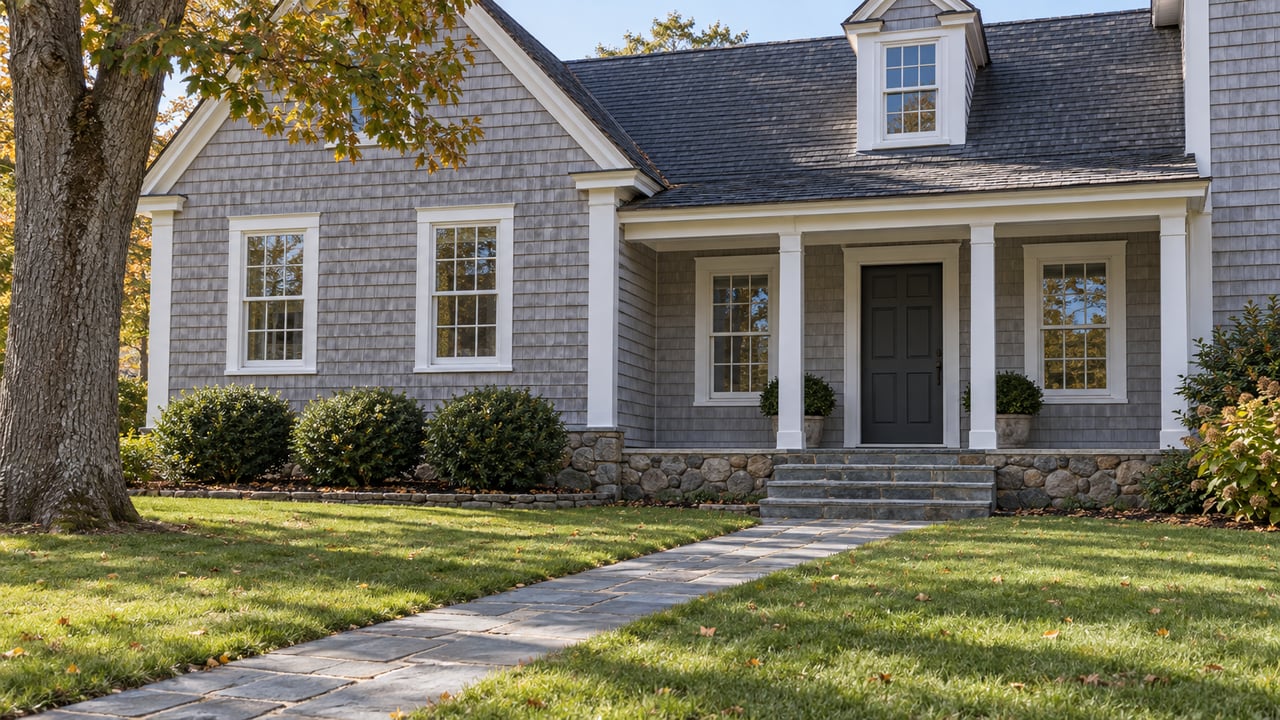
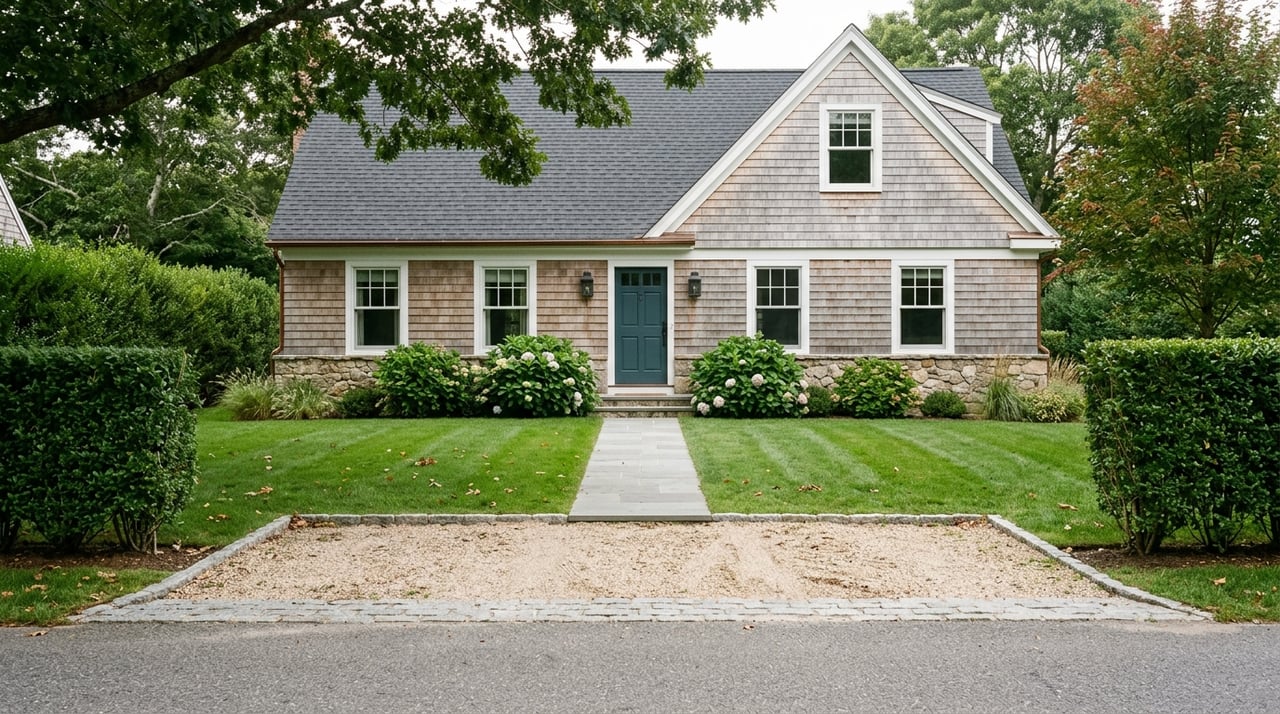
This area tends to appeal to buyers who care about convenience and character in equal measure. Historic houses, barns, community buildings, and commercial buildings create a traditional streetscape, with open front yards and familiar Hamptons materials like natural shingles and white-painted exteriors. If you want quick errands and a stronger sense of center, this is the part of Amagansett to study first.
Transportation is also part of the equation here. The South Fork Commuter Connection stops in Amagansett and links rail and shuttle access to and from the hamlet center. If you are trying to keep weekends or summer stays simple, that can make this area especially practical.
Who this area fits best
This pocket often works best for buyers who want:
- A more walkable daily routine
- Easier access to the station and village core
- Historic scale and established streetscape character
- Less emphasis on large acreage or deep seclusion
If your priority is being able to step out for coffee, run simple errands, or stay close to the center of activity, this area can feel very efficient. In a market as expensive as Amagansett, that lifestyle value matters just as much as square footage.
Inland lanes prioritize privacy and land
A very different search lane begins inland, around Further Lane, Stony Hill Road, and Ocean View Lane. Town planning documents identify estate-type lots in this area and note that one of Amagansett’s major farmland blocks includes land in the Further Lane area. This gives the inland corridor a more spacious, rural feel than the village core.
Stony Hill stands out in particular because the Town identifies it as a priority drinking-water protection area within a broader open-space and groundwater-protection framework. That matters because environmental context is not just background scenery here. It can shape what exists today and what may be feasible in the future.
The preserved landscape also adds to the character of this part of Amagansett. Town trail materials describe native oak, hickory, and American beech forests, rolling terrain, and glacial kettle-hole topography across preserved properties owned by East Hampton Town, Suffolk County, and the Peconic Land Trust. If you picture Amagansett as quiet approach roads, mature trees, and a stronger sense of retreat, this is often the image buyers have in mind.
What to weigh in inland areas
In these inland micro-areas, site quality can matter as much as address. Nearby Stony Hill properties show a wide range of estimated values, from the low $3 million range to well above $10 million. That spread suggests you should look closely at the property itself, not just the street name.
Focus on questions like these:
- How much usable land does the site offer?
- How do preserved buffers affect privacy?
- Are there environmental or groundwater considerations to review?
- How much future expansion potential is realistic?
- Does the setting match your need for seclusion versus convenience?
For buyers looking at larger parcels or more complex sites, this is where disciplined due diligence becomes especially important. In Amagansett, privacy and acreage can be compelling, but they should always be evaluated alongside land-use realities.
Ocean and bay pockets carry different rules
Many buyers start their Amagansett search with one simple goal: get as close to the water as possible. That instinct makes sense, but in Amagansett the ocean and bay edges are shaped by access rules, ecological sensitivity, and development limits, not just views.
The Town lists several Amagansett beach areas, including Atlantic Avenue Beach, Indian Wells Beach, Napeague Lane Beach, Lazy Point, Big Albert’s Landing, Little Albert’s Landing, Barns Hole, and Fresh Pond. Each offers a different use profile. Atlantic Avenue Beach has lifeguards, ADA-accessible restrooms, a concession stand, and vehicular beach access with a Town permit, while Indian Wells Beach has resident-permit parking and lifeguards. Lazy Point adds a bay beach and launching ramp, and Little Albert’s Landing includes bay access, picnic areas, and nature trails.
These details matter because beach-first living is not one single category. A property near an ocean beach can offer a very different daily experience from one near bay access or a launching point. If your weekends revolve around swimming, beach driving, boating, or simply easy shoreline access, the exact location can change the fit.
Environmental limits shape value
Town planning documents identify the Atlantic Double Dunes and Napeague Beach as major undeveloped barrier-beach and backdune ecosystems. They also flag Napeague Harbor and Fresh Pond for habitat, water-quality, and ecological sensitivity. In practical terms, scarcity near the shoreline is tied not only to demand but also to the limits placed on development and use.
That helps explain why pricing can rise sharply when a property has direct ocean orientation, strong dune-side placement, or private beach access. Recent examples in the market show a broad range, from a Bluff Road oceanfront co-op listed at $595,000 to a direct oceanfront home on Dunes Lane that sold for $5.25 million. Seasonal rental pricing also reflects the premium, with one oceanfront rental on Marine Boulevard offered from $70,000 to $95,000 per month depending on the month.
Compare daily-use profiles, not just price
In a place like Amagansett, comparing homes by price per square foot alone can lead you off course. The more useful comparison is often how a block works for your actual life. A home near Main Street may trade acreage for convenience, while an inland estate setting may offer privacy but require a different rhythm of movement and planning.
A beach-area property introduces another set of tradeoffs. Access rights, permit rules, seasonally restricted vehicle access, and environmental constraints can all matter as much as frontage itself. The ocean beach between Indian Wells and Atlantic Avenue, for example, is seasonally restricted for vehicle access according to the Town’s beach-driving guidance.
When you compare homes, it helps to rank the factors that shape your daily routine most. In Amagansett, those often include:
- Walkability to the hamlet core
- Station access
- Beach or bay access
- Preserved open-space buffers
- Privacy level
- Potential for expansion or improvement
That framework gives you a cleaner way to judge value. It also helps you avoid touring homes that look right on paper but do not line up with how you actually want to live.
A practical way to narrow your search
If you are early in the process, start by deciding which of these three broad patterns fits you best: village-adjacent, inland secluded, or ocean-and-bay oriented. That first choice can immediately remove a lot of noise from your search. It also helps you evaluate listings in context instead of treating all Amagansett addresses the same.
From there, refine by property constraints and lifestyle goals. In the village core, focus on character, convenience, and access. Inland, focus on land quality, privacy, and development context. Near the shoreline, focus on beach rights, access logistics, and environmental conditions alongside price.
Amagansett remains a high-end market, and recent reporting shows fewer sales year over year in 1Q 2026. In a market with limited inventory and uneven pricing by subarea, the buyer who understands micro-areas usually shops more efficiently and makes more confident decisions.
If you want a more precise read on which part of Amagansett fits your goals, Marc Heskell can help you evaluate the tradeoffs with a clear, local, and discreet advisory approach.
FAQs
What does “micro-area” mean in an Amagansett home search?
- In Amagansett, a micro-area is a smaller pocket within the hamlet that has its own mix of setting, access, land pattern, and lifestyle feel, such as the Main Street core, inland estate lanes, or ocean and bay areas.
Which Amagansett area is best for walkability and convenience?
- The Main Street and Montauk Highway core near Windmill Lane, Indian Wells Highway, and Abraham’s Landing is the most village-like area, with a compact and walkable setting described in Town planning documents.
Which Amagansett area is best for privacy and larger lots?
- Inland areas around Further Lane, Stony Hill Road, and Ocean View Lane are the main places to focus if you want a more secluded setting, estate-type lots, and preserved natural surroundings.
What should buyers know about Amagansett beach-area homes?
- Buyers should compare more than distance to the water, including beach access type, permit rules, seasonal vehicle restrictions, and environmental factors tied to dunes, wetlands, and protected habitats.
Is Amagansett still an expensive housing market?
- Yes. Recent market data shows a median sale price of $4.6 million and a median listing price of $4.4 million, which keeps Amagansett firmly in the high-end category.
Why do prices vary so much within Amagansett?
- Prices can change sharply based on micro-area, lot size, privacy, beach access, preserved buffers, and site-specific factors such as buildability and environmental constraints.