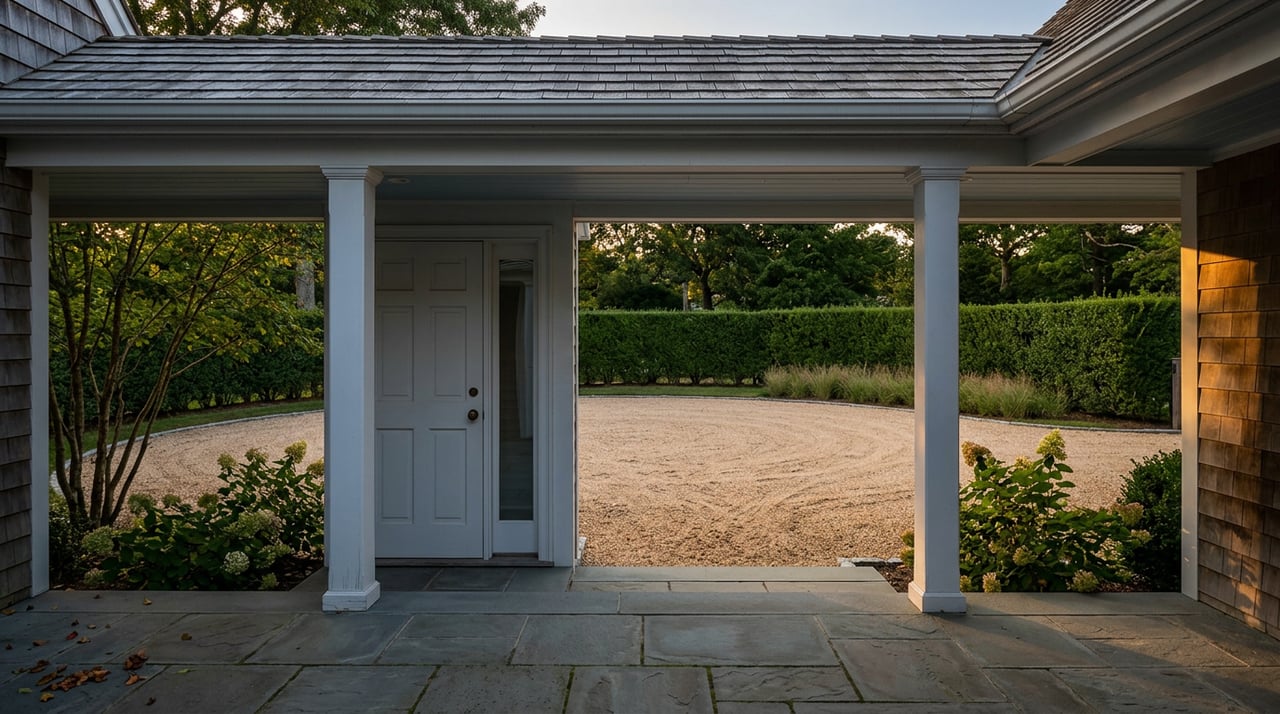
A buyer closes on a shingled house two blocks off Main Street, tells her Manhattan friends to take the train out for the weekend, and gives them the address. What she doesn't mention, because she may not know it herself, is that the train they board will not take them to Sag Harbor. It will take them to Bridgehampton, four miles away, where they'll need a car that may or may not be waiting.
This isn't a scheduling quirk. It's a structural fact about the village that shapes everything from a seller's rental pitch to a buyer's Friday-night math, and it traces back to a decision the Long Island Rail Road made nearly nine decades ago.
The Branch That Closed in 1939
Sag Harbor had a train station once, and for a stretch in the nineteenth century it was the end of the line. The Sag Harbor Branch was the eastern terminus of the LIRR's south shore service from 1869 until 1895, when the railroad pushed its Montauk Extension past Bridgehampton and turned the Sag Harbor line into a spur. The spur limped along for another four decades before the railroad discontinued all service between Bridgehampton and Sag Harbor on May 3, 1939. The old freight house near the former station later became a garden center. The right of way itself was absorbed into what is now the Long Pond Greenbelt, a walking trail rather than a rail line.
Every other major Hamptons village on this list, Southampton, Bridgehampton, East Hampton, Montauk, still has a working LIRR platform. Sag Harbor does not, and hasn't for eighty-seven years. That's not a footnote for anyone weighing the walkable charm of the village against the practical experience of getting there.
What the Cannonball Solves, and What It Doesn't
The LIRR's seasonal Cannonball express returned for its 2026 run on May 21, giving Hamptons-bound riders the fastest scheduled public option off the Island. The train departs Penn Station at 4:07 p.m. on summer Fridays, runs express with no stop at Jamaica, and reaches Westhampton in 92 to 96 minutes depending on the day, before continuing to Southampton, Bridgehampton, East Hampton, and Montauk. The 2026 fare is roughly $33 one way.
That's a real solution for a buyer eyeing a house in Bridgehampton or East Hampton, where the platform sits within a short drive of most addresses. It solves nothing for Sag Harbor, because the Cannonball's route was built around the branch that still exists. A rider aiming for Sag Harbor gets off at Bridgehampton station and is, at that point, exactly where the 1939 abandonment left every train passenger since: four miles short, with no rail option remaining to close the gap.
The Access Matrix, in Plain Terms
| Route | Cost (2026) | Time to Bridgehampton or landing point | Last mile into Sag Harbor village |
|---|---|---|---|
| LIRR Cannonball (Thu/Fri seasonal) | ~$33 one way | 92 to 96 min from Penn Station | Requires shuttle, taxi, or waiting car from Bridgehampton station |
| Driving via Sunrise Highway / Route 114 | Gas, tolls, parking | 90 min on a light day; 3+ hours on a summer Friday | None, arrives directly |
| BLADE Aqua seaplane (seasonal) | Seat pricing varies by season | 35 to 45 min flight from a Manhattan-area departure point | None, lands on the water at the village edge |
The table makes the shape of the problem obvious. Two of the three routes solve the last mile by definition, you drive there, or you land there. Only the train, historically the calmest and cheapest way to reach the East End, dumps a Sag Harbor-bound traveler somewhere else and calls it close enough.
The Shuttle Built for Commuters, Not Weekenders
The gap hasn't gone entirely unaddressed. The South Fork Commuter Connection runs a shuttle between the Bridgehampton LIRR station and stops around Sag Harbor, including Sag Harbor Industries and the South Fork Natural History Museum, timed to specific train arrivals and departures. Riders who buy the discounted "getaways" fare through the platform's ticket machines pay roughly $3.25 for the connection rather than a standard cab fare.
Here is the detail that matters most to anyone picturing a Friday-night arrival: the SFCC shuttle operates Monday through Friday, timed to weekday commuter trains. It was built to move people who work on the East End and commute west, not to catch weekend guests arriving from the city with a suitcase and a dinner reservation. A second-home buyer or a summer tenant stepping off the Cannonball on a Friday afternoon isn't the rider this shuttle was designed around. The infrastructure that theoretically bridges Sag Harbor's rail gap is calibrated to a different commute pattern entirely.
The Workaround That Actually Works
The route that solves Sag Harbor's access problem most completely isn't a train at all. BLADE's seasonal Aqua service lands seaplanes directly on the water at Sag Harbor, putting passengers ashore within walking distance of the village core. Among the handful of air and water landing points that serve the South Fork, Sag Harbor stands out precisely because it isn't a heliport requiring a last-mile car. A rider steps off the plane and is, in a practical sense, already there.
It's a narrow solution, priced and scheduled for a specific kind of traveler, but it illustrates something worth sitting with: the fastest way to solve Sag Harbor's transportation gap in 2026 bypasses the railroad question altogether. The village's best access route was never going to come from a station reopening. It came from the water.
Why This Matters When You're Comparing Sag Harbor to Its Neighbors
None of this makes Sag Harbor a harder place to live. The same absence of through-traffic infrastructure that eliminated the train station is part of what kept Main Street walkable and the harbor uncluttered by the kind of vehicle volume that platform towns tend to absorb. That trade is exactly why buyers seek the village out.
But it is a trade, and it's worth naming plainly rather than discovering it after closing. A house here rewards owners who drive in themselves or who fly the seaplane route, and it asks something extra of anyone counting on the railroad to deliver houseguests, tenants, or family on a normal weekend schedule. If part of the plan for a Sag Harbor property involves seasonal rental income, that calculus belongs in the conversation with prospective tenants before the lease is signed, not discovered by a family standing on the Bridgehampton platform wondering where their ride is.
Compare that to a house a few miles west in Bridgehampton or east in East Hampton, where the platform sits inside town and the Cannonball's stop is the last mile rather than the start of one. The price premium and lifestyle difference between those addresses and a Sag Harbor listing isn't only about square footage or water frontage. Some of it is about which town still has its station.
A Few Questions Worth Asking Before You Tour
Does Hampton Jitney solve the gap the way the train doesn't? Jitney's network runs curbside service across the East End on a different model than the LIRR, with stops set by route rather than by historic station footprint. Anyone weighing a Sag Harbor property should confirm current stop locations directly with the carrier before assuming a curbside option exists at the address in question.
Is the SFCC shuttle ever useful for a weekend buyer? It can be, for anyone whose schedule happens to align with weekday commuter trains, but it wasn't built around a Friday-arrival, Sunday-departure pattern, and shouldn't be relied on as the primary plan for weekend transportation.
Does this affect resale value? Access patterns are one factor among many that shape how a property functions for a given owner's routine. A buyer who drives everywhere or flies seasonally may not experience the rail gap as a cost at all, while one who planned around train access should weigh it directly.
If you're comparing a Sag Harbor address against another East End village and want a clear-eyed look at how access, permitting, or presentation strategy should shape your decision, Heskell Advisors offers a confidential market consultation built around exactly these kinds of specifics.